

Upcoming Events

Declaration 250 – August 1-2, 2026

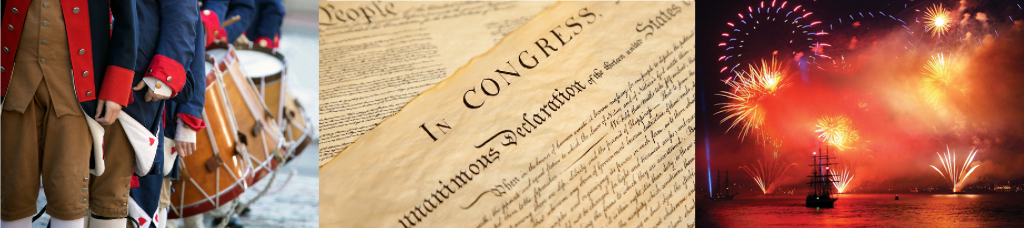
In partnership with The Perry Group, Lake Eerie Heritage Foundation will help host Declaration 250, a national commemoration marking the true signing date of the Declaration of Independence on August 2, 1776.

This once-in-a-generation program will feature speakers, living history, community participation, and a ceremonial signing event at Perry’s Monument.

While July 4, 1776 marks the adoption of the Declaration of Independence, it was on August 2 that the majority of the 56 signers actually affixed their names to the document, risking their lives and livelihoods in defense of liberty. “Declaration 250” aims to restore the historical significance of this day by organizing a ceremonial re-signing of the Declaration at Perry’s Victory and International Peace Memorial, one of America’s most symbolic sites of unity and peace. 

The two-day celebration in the village of Put-In-Bay, Ohio, will feature tall ships, living history performances, keynote speakers and community leaders from across the nation. Nationally syndicated radio host, Hugh Hewitt, will be the master of ceremonies, and The Ohio State University Marching Band will perform. 

All members of the United State Congress will be invited to physically sign the ceremonial 250th anniversary Declaration of Independence. The event will culminate with a firework display. Schools, veterans, historical groups and civic organizations are encouraged to participate in this once-in-a-generation event.

See the latest details here.

Past Events

The Battle: September 10, 1813

At dawn on the morning of September 10, 1813, a lookout spotted six British vessels to the northwest of Put-in-Bay beyond Rattlesnake Island. Immediately Master Commandant Oliver Hazard Perry issued a flurry of orders and made preparations to sail forth to engage the British.

With Perry’s fleet on Lake Erie the British supply route from Fort Malden to Port Dover had been severed. The British had to either fight, or abandon Fort Malden. The British squadron consisted of six ships with sixty-three cannons, while the American flotilla comprised nine vessels and fifty-four guns. The British were armed with long guns that could throw a cannonball approximately one mile, accurately to about one-half mile. The American ships primarily armed with carronades had less than half the range of a long gun. The carronades could inflict much more damage at close range. Perry needed the wind to his back to close within carronade range.

When the squadron sailed from Put-in-Bay harbor at 7 a.m. the American vessels were steering west-northwest; the wind was blowing from the west-southwest. For more than two hours Perry repeatedly tacks his ships in an effort to put the wind to his back, but with no success. The frustrated Perry, conceded to mother nature at 10 a.m., issuing orders to turn his fleet in the opposite direction. But before the order could be executed the wind suddenly shifted and blew from the southeast, placing the wind directly behind the Americans.